

What Makes a Cleanliness Automatic Analysis System Essential for Modern Manufacturing?
2026-05-07
In today's highly competitive industrial environment, product quality and manufacturing precision are more important than ever. Industries such as automotive, aerospace, medical devices, electronics, and precision engineering require strict contamination control during production. Even microscopic particles can affect product performance, reduce equipment lifespan, and increase maintenance costs. This is where the Cleanliness Automatic Analysis System becomes a critical solution for modern factories.
A professional Cleanliness Automatic Analysis System helps manufacturers detect, analyze, and manage contamination efficiently and accurately. Compared with traditional manual inspection methods, automated systems provide faster analysis, repeatable results, and higher operational efficiency. For companies seeking advanced quality control technologies, SuZhou Kolymo Precison Machinery Co.,Ltd. offers reliable and intelligent cleanliness analysis solutions tailored for industrial applications.
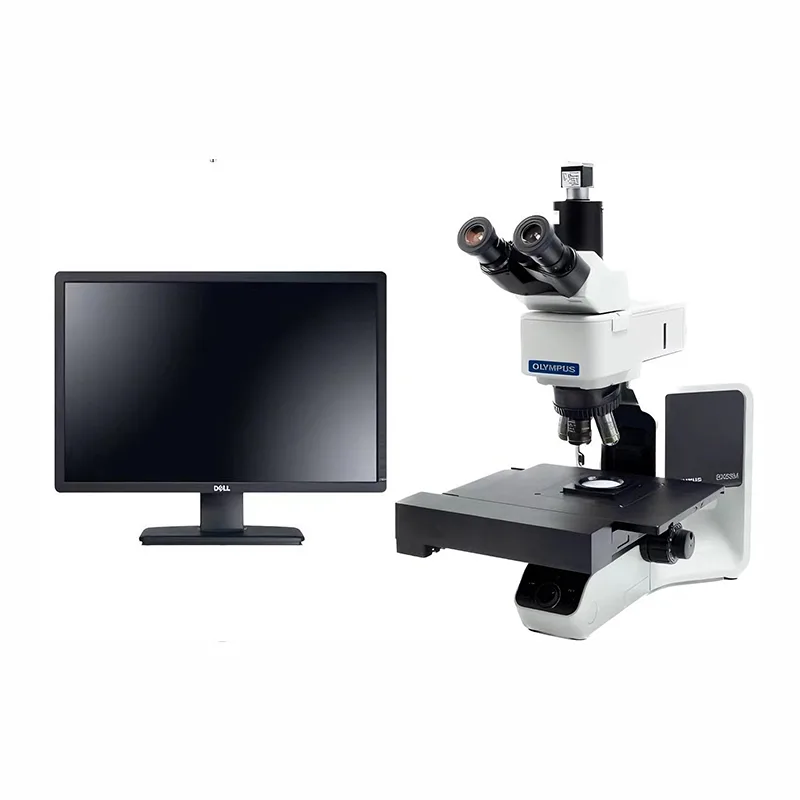
1. Introduction to Cleanliness Automatic Analysis System
A Cleanliness Automatic Analysis System is an intelligent inspection solution designed to identify and evaluate contaminants such as particles, fibers, metal debris, and non-metallic residues on industrial components or surfaces.
The system usually combines:
- High-resolution imaging technology
- Advanced optical microscopes
- AI-powered particle recognition
- Automated data analysis software
- Reporting and traceability systems
By automating the inspection process, manufacturers can significantly improve contamination monitoring and maintain international cleanliness standards.
2. Why Cleanliness Control Matters
Industrial contamination may appear invisible to the human eye, but its impact can be extremely costly. Small particles can lead to:
- Mechanical wear
- Blocked fluid systems
- Electrical failure
- Reduced product reliability
- Safety risks
For example, in automotive brake systems or hydraulic components, contamination can directly affect operational safety. In semiconductor manufacturing, microscopic particles can damage delicate circuits.
Therefore, implementing a Cleanliness Automatic Analysis System is not only about quality improvement but also about protecting brand reputation and customer trust.
3. Main Functions of a Cleanliness Automatic Analysis System
Modern cleanliness analysis systems provide multiple intelligent functions that simplify contamination inspection.
| Function | Description |
|---|---|
| Particle Detection | Identifies contaminants automatically |
| Size Classification | Measures particle dimensions accurately |
| Material Identification | Distinguishes metallic and non-metallic particles |
| Automated Reporting | Generates inspection reports instantly |
| Data Storage | Saves inspection history for traceability |
| Statistical Analysis | Supports quality improvement decisions |
These features help manufacturers achieve faster and more consistent inspection results.
4. Key Advantages of Automated Analysis
Higher Inspection Accuracy
Traditional manual inspection depends heavily on operator experience. Automated systems reduce human error and improve consistency.
Faster Processing Speed
A Cleanliness Automatic Analysis System can inspect large numbers of samples in a short period, improving production efficiency.
Improved Data Traceability
Digital reporting and database storage make it easier to track contamination trends and maintain audit records.
Reduced Labor Costs
Automation decreases the need for extensive manual inspection work and reduces long-term operational expenses.
Better Compliance with Standards
Many industries must comply with international standards such as:
- ISO 16232
- VDA 19
- NAS 1638
- ISO 4406
Automated systems simplify compliance management and documentation.
5. Applications Across Different Industries
The Cleanliness Automatic Analysis System is widely used in many precision manufacturing sectors.
Automotive Industry
Used for inspecting:
- Engine components
- Fuel injection systems
- Brake systems
- Transmission parts
Aerospace Industry
Helps ensure contamination-free hydraulic and turbine systems.
Medical Industry
Supports cleanliness inspection for surgical tools and implant components.
Electronics Industry
Prevents contamination damage in semiconductor and circuit board production.
Precision Machinery Manufacturing
Ensures ultra-clean production conditions for high-performance equipment.
6. Manual Inspection vs Automatic Analysis System
| Comparison Item | Manual Inspection | Automatic Analysis System |
|---|---|---|
| Inspection Speed | Slow | Fast |
| Accuracy | Operator-dependent | Highly consistent |
| Data Storage | Limited | Automatic digital storage |
| Reporting | Manual preparation | Instant report generation |
| Labor Requirement | High | Lower |
| Long-Term Cost | Higher | More economical |
From the comparison above, automated systems clearly provide long-term operational advantages.
7. Important Features to Consider
When selecting a Cleanliness Automatic Analysis System, manufacturers should evaluate several important factors.
Image Resolution
High-resolution imaging improves particle detection capability.
Software Intelligence
Advanced AI algorithms help classify contaminants more accurately.
Ease of Operation
User-friendly interfaces reduce training time and improve efficiency.
Customization Capability
Different industries may require customized inspection standards and workflows.
Technical Support
Reliable after-sales service is essential for maintaining system performance.
SuZhou Kolymo Precison Machinery Co.,Ltd. focuses on providing customized solutions that meet different industrial cleanliness inspection requirements.
8. How SuZhou Kolymo Precison Machinery Co.,Ltd. Supports Manufacturers
As industrial quality standards continue to rise, SuZhou Kolymo Precison Machinery Co.,Ltd. provides advanced cleanliness inspection technologies designed for modern manufacturing environments.
The company focuses on:
- Precision optical inspection systems
- Intelligent automation solutions
- Stable system performance
- Customized cleanliness analysis equipment
- Professional technical support
With extensive industry experience, SuZhou Kolymo Precison Machinery Co.,Ltd. helps customers improve product quality, optimize manufacturing efficiency, and reduce contamination-related risks.
9. Future Trends in Cleanliness Analysis
The future of the Cleanliness Automatic Analysis System is becoming increasingly intelligent and data-driven.
Key development trends include:
Artificial Intelligence Integration
AI technology improves particle recognition and analysis accuracy.
Smart Factory Connectivity
Systems can integrate with Industry 4.0 manufacturing platforms for real-time monitoring.
Cloud-Based Data Management
Cloud storage enables remote access to inspection reports and production data.
Fully Automated Workflow
Future systems may support fully unmanned contamination inspection processes.
These innovations will continue transforming industrial quality management.
FAQ
What is a Cleanliness Automatic Analysis System?
A Cleanliness Automatic Analysis System is an automated inspection solution used to detect and analyze contamination particles on industrial components and surfaces.
Which industries use cleanliness analysis systems?
Industries including automotive, aerospace, electronics, medical devices, and precision manufacturing commonly use these systems.
Why is automated cleanliness analysis better than manual inspection?
Automated systems provide faster inspection speed, higher accuracy, improved consistency, and digital traceability.
Can the system comply with international standards?
Yes. Most advanced systems support standards such as ISO 16232, VDA 19, and ISO 4406.
How does SuZhou Kolymo Precison Machinery Co.,Ltd. help customers?
SuZhou Kolymo Precison Machinery Co.,Ltd. provides customized cleanliness inspection solutions, technical support, and advanced automation technologies for industrial manufacturers.
Conclusion
As manufacturing precision requirements continue increasing, contamination control has become a critical factor in product quality and operational reliability. A professional Cleanliness Automatic Analysis System helps manufacturers improve inspection accuracy, reduce contamination risks, enhance production efficiency, and maintain international quality standards.
For companies seeking advanced cleanliness inspection technologies, SuZhou Kolymo Precison Machinery Co.,Ltd. offers intelligent and reliable solutions tailored to modern industrial needs. If you want to improve your manufacturing quality control and optimize cleanliness inspection efficiency, contact us today to learn more about our advanced automation systems and professional support services.