

What Factors Determine the Correct Pressure Gauge Size for a Specific Installation
2026-03-30
Selecting the correct Pressure Gauge size is one of the most critical yet often overlooked decisions in industrial instrumentation. The size of a Pressure Gauge directly impacts readability, safety, installation compatibility, and long-term measurement accuracy. At ZEN, we understand that choosing the right Pressure Gauge size requires a careful evaluation of several technical and environmental factors to ensure optimal performance in any application.
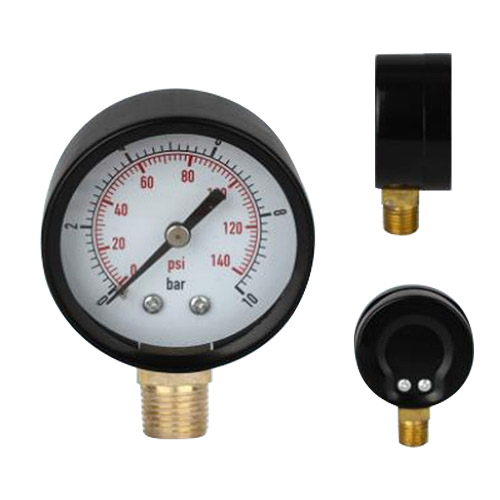
Key Factors Influencing Pressure Gauge Size Selection
When determining the appropriate Pressure Gauge size for a specific installation, engineers must consider the following primary factors. The table below summarizes these critical elements:
| Factor | Description | Impact on Size Selection |
|---|---|---|
| Viewing Distance | The distance between the operator and the gauge | Larger dials (100mm–160mm) are required for distances beyond 2 meters to ensure clear readability |
| Mounting Location | Panel, surface, or direct pipe mounting | Panel installations often accommodate standard sizes (63mm–100mm), while tight spaces may require compact models |
| Pressure Range | Maximum operating pressure relative to full scale | Higher pressures may necessitate larger cases to accommodate robust internal components |
| Environmental Conditions | Vibration, temperature, and moisture exposure | Harsh environments often call for liquid-filled gauges, where case size must accommodate fill volume and thermal expansion |
| Accuracy Requirements | Needed precision for process control | Larger dials typically allow for more scale divisions and finer resolution, improving readability of small increments |
Viewing Distance and Operator Visibility
The primary function of a Pressure Gauge is to provide clear, unambiguous pressure readings to operators. As viewing distance increases, the dial size must increase proportionally. For applications where operators stand several meters away—such as in large pumping stations or refinery fields—a Pressure Gauge with a 100mm or 160mm dial is essential. ZEN offers a comprehensive range of Pressure Gauge sizes, ensuring that every installation achieves optimal visibility without compromising on safety.
Mounting Configuration and Spatial Constraints
Installation space often dictates the maximum allowable Pressure Gauge size. Panel-mounted systems typically accommodate standard 63mm, 100mm, or 160mm diameters, while machinery with limited clearance may require smaller 40mm or 50mm gauges. ZEN recommends conducting a thorough site assessment to match the Pressure Gauge size to the available mounting envelope, ensuring both functionality and ease of maintenance.
Accuracy and Scale Resolution
For processes demanding high precision, a larger Pressure Gauge dial provides greater scale length, enabling finer divisions and more accurate readings. A 160mm Pressure Gauge can display a more detailed scale compared to a 63mm model, reducing parallax error and operator misinterpretation. ZEN engineers consistently emphasize that selecting the correct Pressure Gauge size is a direct contributor to measurement integrity and process reliability.
Pressure Gauge FAQ
What happens if I choose a Pressure Gauge that is too small for my application?
Selecting a Pressure Gauge that is too small for the intended application typically results in poor readability, increased risk of reading errors, and potential safety hazards. When the dial size is insufficient for the viewing distance, operators may misread pressure values, leading to incorrect system adjustments or failure to detect overpressure conditions. Additionally, smaller Pressure Gauge cases often have limited space for internal dampening mechanisms, making them more susceptible to vibration-induced wear and premature failure. ZEN always recommends selecting a Pressure Gauge size that ensures clear visibility from the operator’s typical viewing position, with a minimum of 100mm for distances exceeding 1.5 meters in critical applications.
How does liquid filling affect the required Pressure Gauge size?
Liquid-filled Pressure Gauge units require careful consideration of case size because the fill fluid—typically glycerin or silicone—expands with temperature fluctuations. A larger case provides adequate expansion volume, preventing excessive internal pressure that could damage the window or affect accuracy. For standard liquid-filled applications, ZEN recommends maintaining the same dial diameter as non-filled versions but ensuring that the case design includes proper expansion chambers. In high-vibration environments where liquid filling is mandatory, a 100mm or larger Pressure Gauge is often preferred to accommodate both the fill fluid and the additional structural reinforcement needed for long-term durability.
What is the relationship between Pressure Gauge size and overpressure protection?
The physical size of a Pressure Gauge directly correlates with the available space for overpressure protection mechanisms, such as pressure-relief devices or internal stop pins. Larger Pressure Gauge cases allow for more robust overpressure stops and thicker Bourdon tubes, which enhance safety margins when momentary pressure spikes occur. In applications with frequent pressure surges, ZEN advises selecting a Pressure Gauge size that accommodates factory-installed overpressure limiters without compromising scale visibility. A properly sized Pressure Gauge not only improves safety but also extends instrument lifespan by preventing internal component deformation under extreme conditions.
Conclusion and Contact Information
Selecting the correct Pressure Gauge size is a multifaceted decision that directly impacts operational safety, reading accuracy, and equipment longevity. By carefully evaluating viewing distance, mounting constraints, accuracy needs, and environmental factors, engineers can ensure that their Pressure Gauge installation delivers reliable performance over its entire service life. ZEN provides a full spectrum of Pressure Gauge solutions, from compact 40mm models to high-visibility 160mm designs, all engineered to meet rigorous industrial standards.
For expert assistance in selecting the ideal Pressure Gauge for your specific installation, contact ZEN today. Our technical team offers personalized guidance to help you optimize every aspect of your instrumentation strategy. Reach out to us to discuss your application requirements and discover how ZEN can support your operational excellence.