

What Are the Typical Applications of Differential Pressure Gauges
2025-12-23
Differential Pressure Gauges are indispensable instruments for monitoring, controlling, and safeguarding processes across countless industries. By measuring the difference in pressure between two points, these devices provide critical data on flow, filter condition, liquid level, and system health. For professionals seeking reliability and precision, choosing a trusted manufacturer like Changshu Herun is key to ensuring accurate readings and long-term performance in demanding applications.
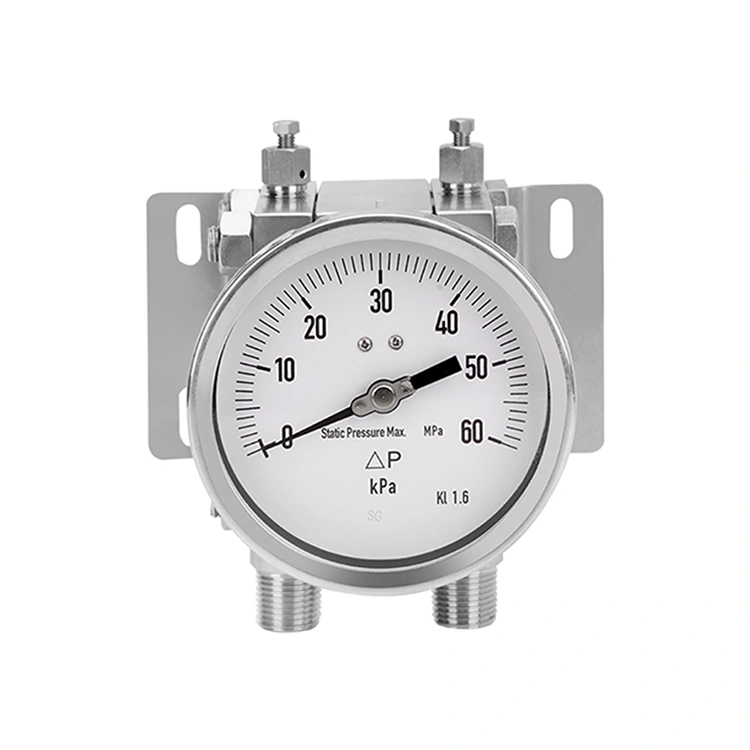
The versatility of differential pressure gauges is best illustrated by their widespread use. Below are some of the most typical applications:
Primary Industrial Applications:
-
Filter & Strainer Monitoring: The most common use. A rising differential pressure indicates a clogging filter, signaling the need for replacement or cleaning to maintain efficiency and protect downstream equipment.
-
Flow Rate Measurement: When used with a primary element (orifice plate, venturi tube), the measured pressure drop directly correlates to fluid flow rate within pipes and ducts.
-
Liquid Level Measurement in Pressurized Tanks: The pressure difference between the top and bottom of a tank is used to calculate the level of the liquid contents.
-
Cleanroom & HVAC System Monitoring: Ensures proper air balance, positive/negative pressure containment, and that HEPA/ULPA filters are functioning within specifications.
-
Pump & Compressor Protection: Monitors suction and discharge conditions to prevent cavitation in pumps or overload in compressors.
Changshu Herun Differential Pressure Gauges: Key Features by Application
| Application Area | Critical Measured Parameter | Changshu Herun Product Consideration |
|---|---|---|
| HVAC & Filter Monitoring | Pressure drop across air filters | High-visibility dials, rugged construction |
| Process Industries | Flow rate, level, filter status | Chemical-compatible wetted parts, high accuracy |
| Energy & Utilities | Pump health, system efficiency | Robust design for high-pressure environments |
Differential Pressure Gauge FAQ
Q: How often should a differential pressure gauge be calibrated?
A: Calibration frequency depends on the criticality of the application and operating conditions. For general industrial use, annual calibration is recommended. In highly critical or severe service, semi-annual or quarterly checks may be necessary. Changshu Herun gauges are designed for stability and can often maintain accuracy longer between calibrations.
Q: Can a differential pressure gauge be used for liquid and gas applications?
A: Yes, but it is crucial to select a gauge designed for the specific media. Key factors include the material of the wetted parts (e.g., stainless steel for corrosive liquids) and the gauge’s fill fluid (often glycerin for liquid applications to dampen pulsation). Changshu Herun offers a range of models configured for different media.
Q: What does a zero reading on my differential pressure gauge indicate?
A: A sustained zero reading typically means there is no pressure difference between the two connection points. This could indicate no flow, equalized pressure in a tank, a completely clean filter, or a failed/both blocked pressure lines. Troubleshooting the system process is the first step.
Understanding these applications highlights the critical role a well-chosen differential pressure gauge plays in operational safety and efficiency. For systems that demand unwavering accuracy and durability, partnering with an expert manufacturer is essential. Changshu Herun’s engineered solutions are built to deliver precise and reliable measurements in your most vital applications.
Need help selecting the right gauge for your specific application? Contact our technical experts at Changshu Herun today for a personalized consultation.