

How Does an Ultra-high Purity Pressure Gauge Improve System Accuracy?
2026-05-28
Summary: Ultra-high purity pressure gauges are essential instruments in industries where contamination can critically impact processes. This article explores their working principles, advantages, applications, and common challenges, providing insights to help engineers and decision-makers select the right solution for their ultra-clean systems.
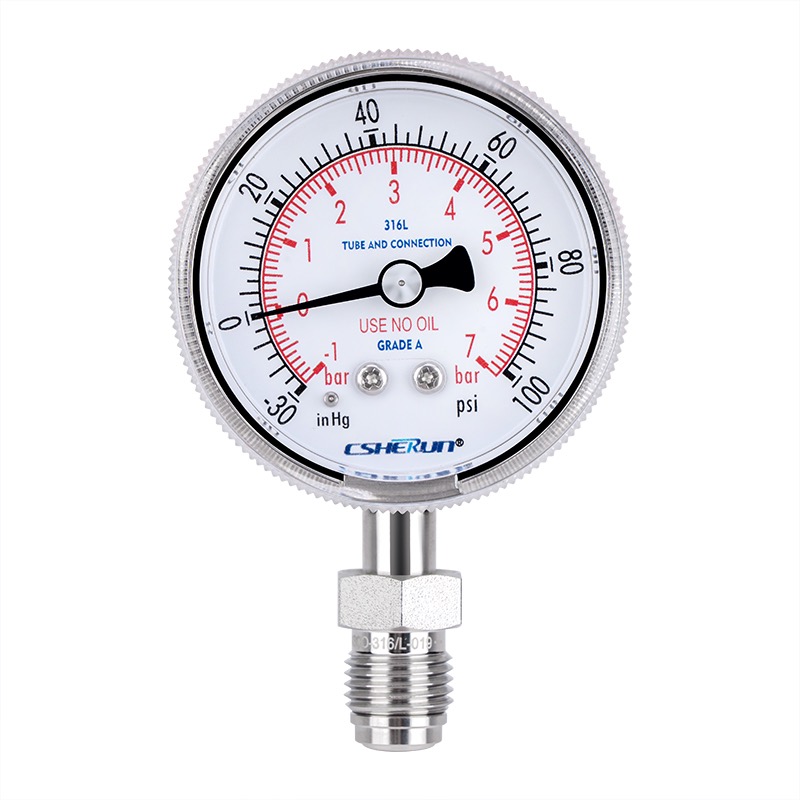
Table of Contents
- What is an Ultra-high Purity Pressure Gauge?
- How Does it Work?
- What Are the Advantages?
- Where Are They Used?
- Tips for Selecting the Right Gauge
- Maintenance Best Practices
- Common Challenges and Solutions
- Frequently Asked Questions
What is an Ultra-high Purity Pressure Gauge?
An ultra-high purity pressure gauge is a precision instrument designed to measure pressure in environments that demand extremely low levels of contamination. Unlike standard gauges, these devices are specifically engineered to maintain system cleanliness, often in semiconductor, pharmaceutical, and laboratory applications.
- Key Feature: Contamination-free construction materials such as 316L stainless steel and electropolished surfaces.
- Typical Pressure Range: From vacuum conditions up to several hundred bar.
- Accuracy: Often better than ±0.25% of full scale.
How Does it Work?
Ultra-high purity pressure gauges operate on the same fundamental principles as conventional gauges but with additional design considerations:
- Diaphragm Technology: A thin metal diaphragm deflects under pressure and converts this deflection into an electrical or mechanical signal.
- Electropolished Pathways: All wetted surfaces are polished to reduce particulate accumulation and prevent contamination.
- Sealed Sensors: Advanced sensors ensure no leak paths that could compromise purity.
| Gauge Type | Working Principle | Application |
|---|---|---|
| Capacitive | Diaphragm changes capacitance with pressure | Semiconductor vacuum systems |
| Piezo-resistive | Diaphragm strain converted to electrical signal | Laboratory gas measurement |
| Resonant Sensor | Frequency changes with applied pressure | High-precision research applications |
What Are the Advantages?
Ultra-high purity pressure gauges offer several critical benefits for sensitive systems:
- Contamination Control: Prevents particle and chemical contamination in high-purity processes.
- High Accuracy: Minimizes measurement errors in critical applications.
- Durability: Resistant to corrosive gases and high-temperature cleaning procedures.
- Reliability: Provides consistent readings for long-term process stability.
Where Are They Used?
These gauges are widely used in industries where contamination control is vital:
- Semiconductors: Ultra-clean vacuum chambers for wafer fabrication.
- Pharmaceuticals: Monitoring pressure in sterile production lines.
- Food & Beverage: Maintaining hygienic conditions in processing systems.
- Research Labs: High-precision experiments requiring pure environments.
Tips for Selecting the Right Gauge
Choosing the proper ultra-high purity pressure gauge requires considering several factors:
- Determine the required pressure range for your process.
- Check the material compatibility with gases or liquids in your system.
- Consider the accuracy and response time necessary for your application.
- Review cleaning and maintenance requirements for ease of use.
- Consult the manufacturer’s certifications to ensure purity standards.
Maintenance Best Practices
Maintaining ultra-high purity pressure gauges ensures longevity and measurement accuracy:
- Regularly inspect and clean all wetted surfaces with approved solvents.
- Check for leaks using non-contaminating methods.
- Calibrate the gauge periodically according to manufacturer instructions.
- Store in a clean environment when not in use.
Common Challenges and Solutions
Even high-quality gauges can face challenges. Here’s how to address them:
| Challenge | Cause | Solution |
|---|---|---|
| Drift in readings | Temperature changes or sensor aging | Regular calibration and temperature compensation |
| Contamination buildup | Improper cleaning or material residues | Use electropolished surfaces and follow strict cleaning protocols |
| Leakage | Seal failure or connection issues | Inspect seals and fittings regularly |
Frequently Asked Questions
-
Q: Can these gauges measure both gases and liquids?
A: Yes, but the wetted materials must be compatible with the medium. -
Q: How often should calibration be performed?
A: Typically every 6–12 months, depending on usage intensity and industry standards. -
Q: Are ultra-high purity gauges suitable for corrosive gases?
A: Yes, if made from corrosion-resistant alloys and properly maintained. -
Q: What makes CSHERUN gauges stand out?
A: CSHERUN provides electropolished, contamination-free designs with high accuracy and reliable long-term performance.
CSHERUN’s Ultra-high Purity Pressure Gauge ensures precise measurement, contamination control, and durability for demanding industrial and laboratory applications. For more information or to discuss your specific requirements, contact us today.