

How does a High Speed Checkweigher improve production accuracy and efficiency?
2026-04-14
Abstract: High Speed Checkweigher systems are essential in modern automated production lines where accuracy, speed, and compliance are critical. This article explains how these systems work, why they are important, and how they solve common manufacturing challenges such as underweight/overweight products, regulatory compliance risks, and production inefficiencies. It also explores industry applications, key selection criteria, and maintenance considerations, with practical insights from industrial solutions provided by J-SKY.
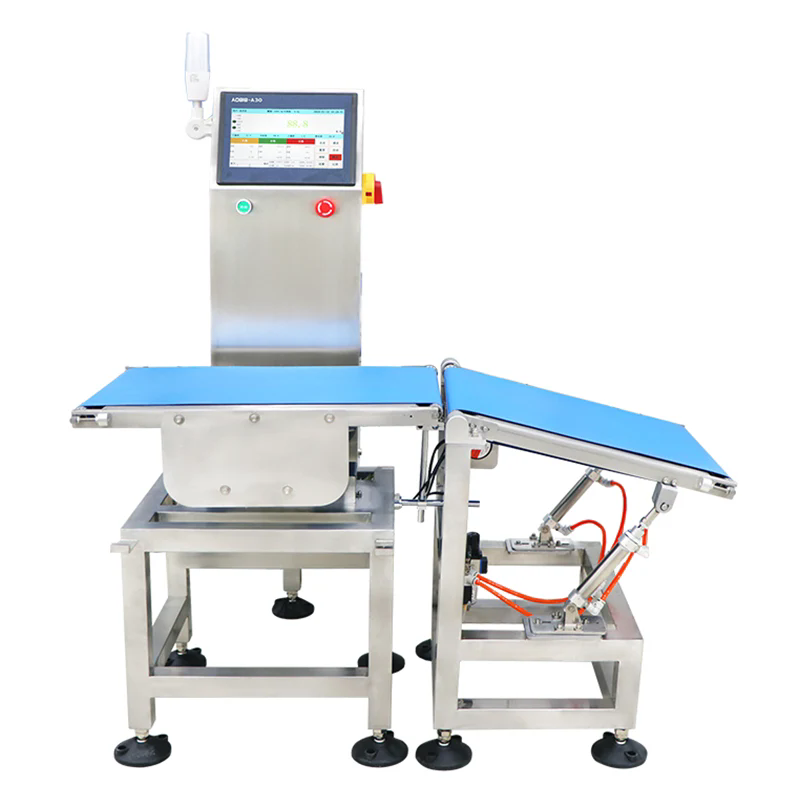
Table of Contents
- Article Outline
- 1. Introduction to High Speed Checkweigher
- 2. How a High Speed Checkweigher Works
- 3. Key Features of Modern Systems
- 4. Core Benefits for Manufacturing
- 5. Common Production Pain Points Solved
- 6. Industrial Applications
- 7. Manual Weighing vs Automated Checkweighing
- 8. How to Choose the Right System
- 9. Maintenance and Operational Tips
- 10. Frequently Asked Questions
- 11. Conclusion
Article Outline
This article provides a structured overview of High Speed Checkweigher systems, covering working principles, operational benefits, industry use cases, and selection guidelines. It is designed to help production managers, engineers, and quality control teams make informed decisions for optimizing packaging and weighing processes.
1. Introduction to High Speed Checkweigher
A High Speed Checkweigher is an automated industrial weighing system used to verify the weight of products as they move along a production line. It ensures each product meets predefined weight standards without interrupting workflow.
In industries such as food processing, pharmaceuticals, cosmetics, and logistics, maintaining consistent weight is not only a quality requirement but also a legal obligation. Even small deviations can lead to product recalls, regulatory penalties, or financial losses.
Modern solutions developed by companies like J-SKY integrate precision sensors, high-speed conveyor systems, and intelligent rejection mechanisms to ensure seamless production control.
2. How a High Speed Checkweigher Works
The working principle of a High Speed Checkweigher is based on dynamic weighing technology. Products pass through different stages in a continuous flow:
- Infeed Conveyor: Aligns and spaces products evenly.
- Weighing Section: A load cell measures product weight in motion.
- Control System: Compares measured weight with preset limits.
- Rejection Mechanism: Automatically removes non-compliant items.
This process occurs in milliseconds, allowing thousands of units per hour to be checked without slowing production.
3. Key Features of Modern Systems
- High-precision load cells for accurate measurement
- Real-time data monitoring and reporting
- Automatic rejection systems (air blast, push arm, drop flap)
- User-friendly touchscreen interface
- Integration with production line software
- Stainless steel structure for hygiene compliance
Advanced systems provided by J-SKY are designed for harsh industrial environments while maintaining long-term stability and accuracy.
4. Core Benefits for Manufacturing
- Improved Accuracy: Ensures every product meets weight standards.
- Reduced Waste: Prevents overfilling and material loss.
- Regulatory Compliance: Meets industry and government standards.
- Increased Efficiency: Eliminates manual weighing errors.
- Data Traceability: Records every product weight for audit purposes.
5. Common Production Pain Points Solved
Manufacturers often face operational inefficiencies that directly impact profitability. A High Speed Checkweigher addresses these challenges effectively:
- Inconsistent Product Weight: Eliminates human error in packaging lines.
- Regulatory Risk: Prevents fines due to underweight products.
- Production Bottlenecks: Ensures continuous flow without manual checks.
- High Labor Costs: Reduces dependency on manual inspection teams.
By integrating systems from J-SKY, manufacturers achieve a more stable and predictable production environment.
6. Industrial Applications
High Speed Checkweighers are widely used across multiple industries:
- Food and beverage packaging
- Pharmaceutical tablet and capsule production
- Cosmetic product filling lines
- Industrial parts manufacturing
- E-commerce logistics and parcel sorting
Each application requires specific customization in terms of speed, accuracy, and rejection method, which is why modular systems are increasingly preferred.
7. Manual Weighing vs Automated Checkweighing
| Aspect | Manual Weighing | High Speed Checkweigher |
|---|---|---|
| Accuracy | Prone to human error | Highly precise and consistent |
| Speed | Slow and labor-intensive | Thousands of units per hour |
| Labor Cost | High dependency on operators | Minimal manual intervention |
| Data Tracking | Limited or manual records | Automated digital logging |
8. How to Choose the Right System
Selecting the right High Speed Checkweigher depends on several operational factors:
- Production Speed: Match system capacity with line throughput
- Weight Range: Ensure compatibility with product size and weight
- Accuracy Requirements: Determine acceptable tolerance levels
- Environment: Consider dust, moisture, and temperature conditions
- Integration: Ensure compatibility with existing production systems
J-SKY provides tailored solutions based on these requirements, ensuring optimal system performance in different industries.
9. Maintenance and Operational Tips
Proper maintenance ensures long-term reliability and accuracy:
- Regular calibration of load cells
- Cleaning conveyor belts and sensors
- Checking air pressure systems for rejection units
- Updating control software when required
- Routine inspection of mechanical components
Preventive maintenance reduces downtime and extends equipment lifespan significantly.
10. Frequently Asked Questions
Q1: What accuracy can a High Speed Checkweigher achieve?
Most industrial systems can achieve precision within milligram to gram-level tolerances depending on product type.
Q2: Can it be integrated into existing production lines?
Yes, modern systems are designed for seamless integration with minimal disruption.
Q3: Is it suitable for small production facilities?
Yes, scalable models are available for both small and large-scale operations.
Q4: How fast can it operate?
Depending on configuration, some systems can process hundreds or thousands of units per minute.
11. Conclusion
A High Speed Checkweigher is no longer optional in competitive manufacturing environments—it is a critical component for ensuring accuracy, efficiency, and compliance. By automating weight verification, manufacturers can eliminate costly errors, improve throughput, and maintain consistent product quality.
Solutions provided by J-SKY are engineered to meet demanding industrial requirements while supporting long-term operational stability. Whether you are upgrading an existing line or building a new facility, integrating a reliable checkweighing system can significantly improve overall productivity.
To learn more about advanced configurations and customized solutions, J-SKY is ready to support your production needs. contact us today to discuss how we can help optimize your weighing and packaging systems for maximum efficiency and accuracy.