Article Summary
Capillary pressure gauges are critical instruments in industrial systems for accurate pressure measurement, especially in environments with vibration, high temperatures, or corrosive media. This article explains how capillary pressure gauges operate, their benefits, installation guidelines, troubleshooting tips, and frequently asked questions to help engineers and technicians select and maintain the right gauge.
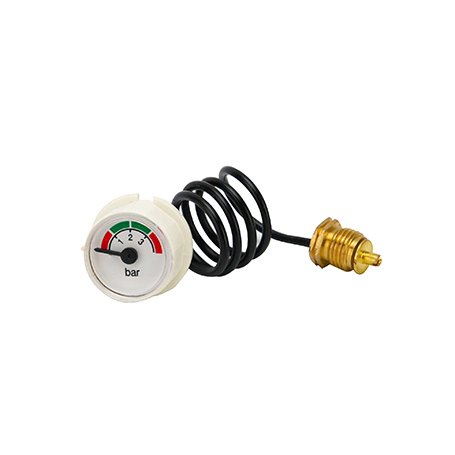
Introduction to Capillary Pressure Gauges
A capillary pressure gauge is a device designed to measure the pressure of gases or liquids remotely. By using a flexible capillary tube, the gauge allows the pressure-sensing element to be separated from the process media, protecting the instrument from extreme temperatures, vibrations, or corrosive substances. This separation ensures reliable and safe pressure readings in demanding industrial environments.
Working Principle
The operation of a capillary pressure gauge relies on transmitting pressure from the process medium through a liquid-filled capillary tube to the measuring element of the gauge. This setup protects the gauge from direct contact with the process, making it suitable for high-temperature or high-vibration applications. The basic working steps include:
-
The process fluid exerts pressure on a diaphragm or sensing bulb.
-
The pressure is transmitted through a capillary tube filled with a non-compressible fluid.
-
The gauge indicator responds to the transmitted pressure, providing a visual reading.
Below is a simple comparison of gauge types and their usage environments:
|
Gauge Type
|
Suitable Environment
|
Advantages
|
|
Direct Contact Gauge
|
Normal temperature and low vibration
|
Simple, inexpensive
|
|
Capillary Pressure Gauge
|
High temperature, vibration, or corrosive media
|
Safe, accurate, flexible installation
|
Advantages and Applications
Capillary pressure gauges offer several benefits:
-
Protection from extreme process conditions.
-
Flexible installation in hard-to-reach areas.
-
Improved measurement accuracy under vibration.
-
Compatible with corrosive fluids when filled with appropriate dampening liquids.
Common applications include:
-
Boilers and high-temperature pipelines
-
Chemical reactors and tanks
-
Marine and offshore pressure monitoring
-
Steam systems and HVAC equipment
Installation Guidelines
To ensure reliable performance, follow these installation recommendations:
-
Keep the capillary tube free from kinks and bends sharper than 180°.
-
Avoid excessive bending near the sensing element or gauge connection.
-
Ensure proper support for long capillary lengths to prevent sagging.
-
Use appropriate fluid fill for the capillary tube based on operating temperature.
Correct installation enhances the gauge lifespan and measurement accuracy.
Maintenance and Troubleshooting
Routine maintenance and inspection help maintain the accuracy and longevity of capillary pressure gauges. Key maintenance tips include:
-
Check for fluid leakage at connections and fittings.
-
Ensure that the capillary is not exposed to sharp mechanical stress.
-
Inspect the gauge for corrosion or physical damage.
-
Calibrate the gauge periodically according to industry standards.
Troubleshooting common issues:
|
Problem
|
Possible Cause
|
Solution
|
|
Erratic readings
|
Air bubbles in capillary
|
Bleed the capillary and refill with dampening fluid
|
|
Stuck needle
|
Mechanical blockage or debris
|
Clean or replace the gauge mechanism
|
|
Fluid leakage
|
Loose connections or damaged tubing
|
Inspect and tighten fittings or replace capillary
|
Frequently Asked Questions
Q: Can a capillary pressure gauge measure high-pressure steam?
A: Yes, if the gauge and capillary are rated for high-temperature and high-pressure environments. Proper fluid fill and materials must be selected.
Q: What is the maximum length for a capillary tube?
A: It depends on the gauge manufacturer and fill fluid. Typically, lengths up to 10 meters are possible without significant reading error.
Q: How often should the gauge be calibrated?
A: Calibration is recommended annually or according to the criticality of the measurement application.
Conclusion
Capillary pressure gauges are essential for industries that require accurate and safe pressure measurement in extreme environments. By understanding their working principle, advantages, installation, and maintenance practices, engineers can select the appropriate gauge for any application. For high-quality capillary pressure gauges, visit Ningbo Rising Instrument Co.,Ltd. and contact us for expert advice and solutions tailored to your industrial needs.