

How Can an Electronic Platform Scale Improve Weighing Accuracy in Packaging Operations?
2026-11-25
An Electronic Platform Scale improves weighing accuracy in packaging operations by providing consistent weight measurements, reducing manual calculation errors, and helping operators identify underweight or overweight packages before dispatch. In manufacturing and distribution facilities, accurate weighing is essential for controlling product quantities, maintaining packaging consistency, and meeting customer requirements. From individual cartons and bulk material containers to finished product batches, a properly configured weighing system supports more reliable weight verification throughout the packaging process.
However, weighing accuracy depends on more than the display resolution of a scale. Load cell performance, platform stability, tare compensation, calibration, loading procedures, and environmental conditions all influence the final result. Jiangsu Jutian Weighing Equipment Co., Ltd. focuses on industrial weighing equipment, where practical operation and measurement consistency are important considerations. Understanding these factors helps packaging businesses select an appropriate weighing configuration and establish more dependable quality control procedures.
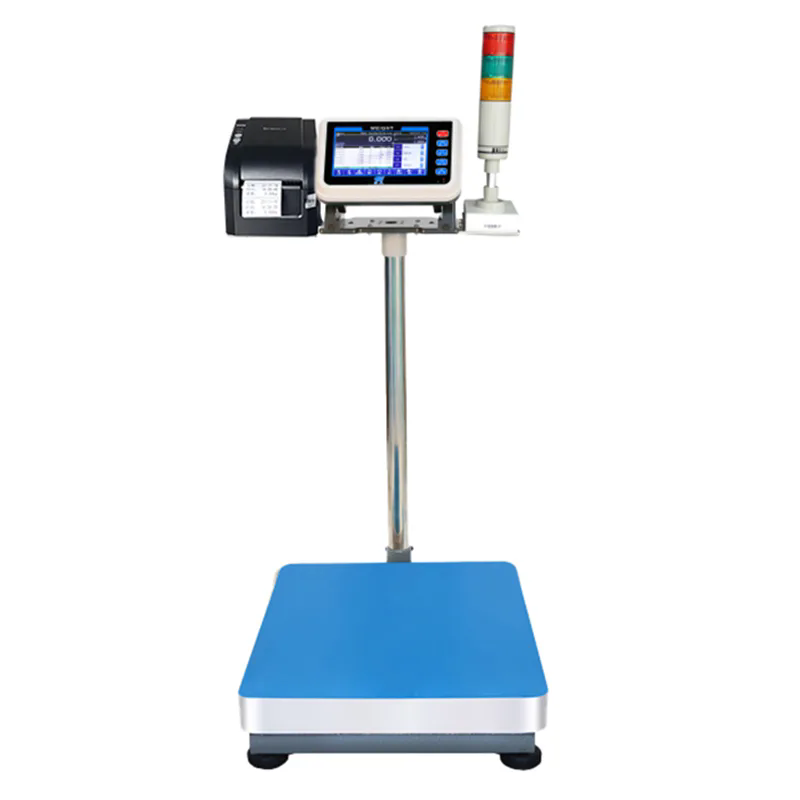
How Does an Electronic Platform Scale Reduce Weight Variations During Packaging?
Packaging operations frequently involve repetitive weighing tasks. Operators may need to measure raw materials, verify filled containers, check finished cartons, or confirm the total weight of products prepared for shipment. When these activities rely on inconsistent manual methods, small differences can accumulate across production batches.
A properly selected Electronic Platform Scale helps standardize the measurement process. Its load cell system converts the force applied to the platform into electrical signals, which are processed by the weighing indicator and displayed as a weight value. This provides operators with a consistent measurement reference when handling different products and packaging formats.
Several factors explain how this equipment supports packaging accuracy:
- Consistent measurement procedures: Operators can follow the same weighing sequence for individual packages, reducing differences caused by subjective estimation.
- Clear weight readings: Digital displays make measured values easier to read and record than traditional manual measurement methods.
- Repeatable weighing operations: A stable platform and suitable weighing configuration help maintain consistency across repeated measurements.
- Container weight compensation: Tare functions allow operators to separate the weight of packaging materials from the actual product contents.
- Weight deviation identification: Compatible indicators can compare measured values with preset limits to identify potential packaging problems.
Consider a packaging facility preparing cartons of industrial components. Each carton must contain a specified quantity of products, and its net weight needs to remain within an established range. Operators can weigh representative cartons during production and compare the readings with the target values. If a measurement falls outside the acceptable range, the affected package can be inspected before it moves to the next production stage.
This process does not eliminate every source of packaging variation, but it gives quality personnel a practical measurement method for identifying problems earlier. Our approach to industrial weighing focuses on matching the equipment configuration with the actual load range, packaging materials, and operating frequency.
Why Do Load Cells, Platform Design, and Tare Functions Matter?
Reliable packaging measurements begin with the mechanical and electronic components of the weighing system. Even when operators follow the correct procedure, unsuitable sensors, unstable installation, or inconsistent container compensation can affect the results.
Load cells are central to the measurement process. They respond to the force applied to the weighing platform and generate electrical signals that the indicator converts into weight readings. Their capacity, sensitivity, installation arrangement, and compatibility with the indicator all influence the performance of the complete system.
Platform construction is equally important. Packaging facilities may handle cartons, drums, plastic containers, metal components, and irregularly shaped loads. The weighing surface should accommodate these items without creating unsafe or unsuitable loading conditions. Loads should remain within the rated capacity and be positioned appropriately on the platform.
Tare compensation provides another important accuracy advantage. Packaging materials contribute to gross weight but are not part of the actual product quantity. The relationship is straightforward:
Net Weight = Gross Weight - Tare Weight
For example, a filled carton has a gross weight of 12.5 kg, while its empty packaging weighs 0.5 kg. The actual product weight is therefore 12 kg. Using tare compensation helps operators obtain the net weight without repeatedly performing manual subtraction.
| Technical Factor | Function in the Weighing System | Impact on Packaging Accuracy |
| Load Cell | Converts applied force into electrical signals | Influences measurement consistency and response |
| Division Value | Determines the smallest displayed weight increment | Affects the level of detail available to operators |
| Platform Dimensions | Provide the surface for supporting packages and containers | Help accommodate different product sizes and loading positions |
| Weighing Indicator | Processes signals and displays weight information | Determines available functions and measurement presentation |
| Tare Function | Compensates for container or packaging weight | Supports accurate net weight measurement |
| Calibration | Checks and adjusts measurement performance against suitable standards | Helps maintain reliable measurement results |
For packaging applications, buyers should pay particular attention to the relationship between maximum capacity and division value. A scale selected only because it can handle heavy cartons may not provide sufficient resolution for lighter packages. Conversely, an unnecessarily high-resolution configuration does not automatically guarantee better real-world accuracy.
Jiangsu Jutian Weighing Equipment Co., Ltd. should be consulted for the specifications of the intended model, including its load cell configuration, platform dimensions, indicator functions, maximum capacity, and division value. Our factory's model-specific technical information should be used to confirm suitability rather than assuming that every configuration has identical specifications.
How Can Weighing Functions Strengthen Packaging Quality Control?
Different packaging processes require different weighing procedures. Some facilities need to measure the net weight of filled containers, while others must check finished packages against predefined limits or calculate the combined weight of several batches. Selecting the appropriate indicator functions can make these tasks more consistent and easier to manage.
The following functions are particularly relevant to industrial packaging operations, although their availability depends on the selected indicator configuration.
1. Standard Weighing
Standard weighing provides the direct weight measurement of a package, container, or finished product. It is commonly used for incoming material checks, intermediate production inspections, and final package verification. Operators place the load on the platform, wait for a stable reading, and record the result according to the facility's quality procedures.
2. Tare and Net Weight Weighing
This function is useful when products are packaged in cartons, drums, buckets, or reusable containers. By compensating for the empty packaging weight, operators can determine the actual product quantity. Consistent tare procedures are particularly important when different container types are used within the same production area.
3. Checkweighing
When supported by the indicator, checkweighing compares the measured weight against preset upper and lower limits. The result helps operators identify underweight, acceptable, and overweight packages. Depending on the configuration, the system may provide visual indications or audible alarms to support inspection procedures.
4. Accumulation
Accumulation allows operators to add individual weighing results to obtain a combined total. For example, a warehouse may weigh several cartons separately because they cannot be placed on the platform simultaneously. A compatible indicator can calculate the cumulative weight, helping staff prepare batch records and dispatch information.
5. Piece Counting
Some packaging operations handle identical small components such as screws, connectors, washers, and fasteners. A compatible counting function uses the average unit weight of a reference sample to estimate the total quantity in a batch. Its effectiveness depends on consistent component weights and sufficient weighing resolution.
These functions address different stages of packaging quality control. A business does not necessarily need all of them. The appropriate configuration depends on whether its priority is net weight verification, package inspection, batch recording, or component quantity management.
When evaluating an Electronic Platform Scale, our selection criteria include the actual packaging workflow, the required measurement tolerance, and the indicator functions needed by operators. This prevents unnecessary equipment complexity while ensuring that essential weighing tasks can be completed effectively.
Which Technical Specifications Should Packaging Businesses Evaluate?
Technical specifications should be considered in relation to the products being packaged rather than as isolated figures. Maximum capacity determines the heaviest load that the equipment is rated to measure, while the division value indicates the smallest displayed increment. Platform dimensions determine whether packages can be positioned properly, and the indicator determines which weighing functions are available.
Before purchasing, packaging businesses should confirm the following product specifications for the selected model:
| Specification | Information to Confirm | Packaging Application Consideration |
| Maximum Capacity | Rated weighing range and available capacity options | Should cover the heaviest filled package or container |
| Division Value | Available display increments | Should suit the required package weight tolerance |
| Platform Size | Length, width, and usable weighing area | Must accommodate the largest package safely |
| Load Cell Specifications | Sensor type, rated capacity, and configuration | Relevant to system performance and load measurement |
| Indicator Functions | Standard weighing, tare, counting, checkweighing, and accumulation availability | Should match the actual packaging workflow |
| Display and Units | Display type, readability, and supported measurement units | Should support clear operation and reporting |
| Communication Interfaces | Available data output and connection options | Important when packaging records need to be transferred |
| Environmental Protection | Specified protection rating and operating conditions | Should suit dust, moisture, and other site conditions |
These parameters must be confirmed against the actual product documentation. No universal capacity, accuracy class, platform size, or protection rating should be assumed across different models.
Packaging facilities should also consider their installation conditions. Vibrations from conveyors and nearby production machinery can cause unstable readings. Uneven floors, mechanical contact, damaged cables, and excessive loading can also affect measurement performance.
For businesses comparing equipment, Jiangsu Jutian Weighing Equipment Co., Ltd. can be contacted to confirm the available configurations and technical details. Our purchasing evaluation should cover both the required weighing functions and the operating environment, ensuring that the selected model is appropriate for its intended packaging application.
How Can Packaging Facilities Maintain Consistent Weighing Results?
Equipment selection establishes the foundation for accurate weighing, but daily operating procedures determine how consistently that performance is maintained. Packaging facilities should develop straightforward instructions for platform preparation, loading, zero checking, measurement recording, and periodic verification.
A practical weighing procedure should include the following steps:
- Inspect the weighing area: Remove loose packaging materials and check that the platform is free from obstruction.
- Confirm the zero reading: Ensure that the unloaded indicator displays the expected zero value.
- Check the packaging tare: Apply the correct container compensation when net weight is required.
- Position the package correctly: Keep the load within the platform's usable weighing area and rated capacity.
- Wait for stability: Allow the displayed value to settle before recording the measurement.
- Compare the result: Check the measured weight against the applicable packaging specification.
- Record deviations: Investigate unusual results rather than automatically accepting or adjusting them.
Periodic calibration and verification are also important. Calibration checks the relationship between the displayed measurement and suitable reference standards, while verification procedures help determine whether the equipment continues to meet the relevant operational or regulatory requirements. The appropriate frequency depends on usage, measurement risk, internal quality procedures, and local regulations.
When unstable readings occur, operators should first investigate common causes such as vibration, uneven installation, material residue, or incorrect load positioning. Persistent measurement problems require inspection by qualified technicians rather than repeated adjustments by untrained personnel.
Our approach to packaging weighing emphasizes consistent procedures alongside suitable equipment specifications. A reliable weighing process helps businesses identify deviations earlier, improve production records, and maintain better control over packaged product quantities.
Conclusion: How Does Accurate Platform Weighing Support Better Packaging Results?
Accurate weighing is an important part of packaging quality control, material management, and order preparation. A properly configured Electronic Platform Scale supports these activities through stable weight measurement, tare compensation, suitable indicator functions, and repeatable operating procedures. However, dependable results require the right combination of load cell performance, platform design, capacity, division value, installation conditions, and regular verification.
Jiangsu Jutian Weighing Equipment Co., Ltd. can help industrial buyers evaluate weighing equipment according to their packaging requirements. Contact our team with your product weight range, packaging dimensions, required functions, and working environment to discuss a suitable configuration. Our factory can provide model-specific technical information to support your purchasing decision and help establish a more consistent weighing process.
Frequently Asked Questions
1. How accurate should an industrial platform scale be for packaging operations?
The required weighing accuracy depends on package weight, product tolerance, production volume, and applicable regulations. A facility handling heavy cartons may have different measurement requirements from one packaging small electronic components. Buyers should evaluate the scale's maximum capacity, division value, documented accuracy specifications, and calibration requirements together. The selected equipment must provide sufficient measurement capability for the actual acceptable weight range rather than relying on display resolution alone.
2. Can an Electronic Platform Scale detect underfilled and overweight packages?
Yes, when its indicator supports checkweighing, the system can compare measured package weight with preset upper and lower limits. It can then indicate whether the result is underweight, within the acceptable range, or overweight. Depending on the configuration, visual signals or audible alarms may also be available. Operators can use these results to identify packages requiring inspection before storage or shipment. The function supports weight-based quality checks but does not replace other product inspection procedures.
3. How often should a packaging weighing scale be calibrated?
Calibration frequency depends on weighing frequency, operating conditions, measurement risk, internal quality requirements, and applicable legal metrology regulations. Facilities with frequent weighing cycles or strict product tolerances may require more regular verification than occasional-use environments. Businesses should establish a documented schedule, use suitable reference weights, and arrange professional inspection when results become unstable or inconsistent. Calibration and verification records also help demonstrate that weighing equipment is being managed under controlled operating procedures.