

How Can a Bourdon Tube Dry Pressure Gauge Improve Industrial Pressure Monitoring?
2026-11-03
A reliable pressure reading is essential for maintaining equipment performance, preventing unexpected downtime, and protecting industrial systems. Whether used in pneumatic equipment, compressed air lines, pumps, or general manufacturing machinery, a Bourdon Tube Dry Pressure Gauge provides a straightforward way to monitor operating pressure without requiring an electrical power supply.
This guide explains how dry Bourdon tube pressure gauges work, which components influence their performance, how to select the correct specifications, and what buyers should consider before placing an order. It also introduces practical applications and maintenance recommendations to help businesses make informed purchasing decisions.
Article Overview
- Understanding the mechanical measuring principle behind Bourdon tube technology.
- Identifying the differences between dry and liquid-filled pressure gauges.
- Matching pressure ranges, dial sizes, materials, and connections to operating conditions.
- Reducing purchasing risks through appropriate specification checks.
- Improving measurement reliability through correct installation and maintenance.
1. What Is a Bourdon Tube Dry Pressure Gauge?
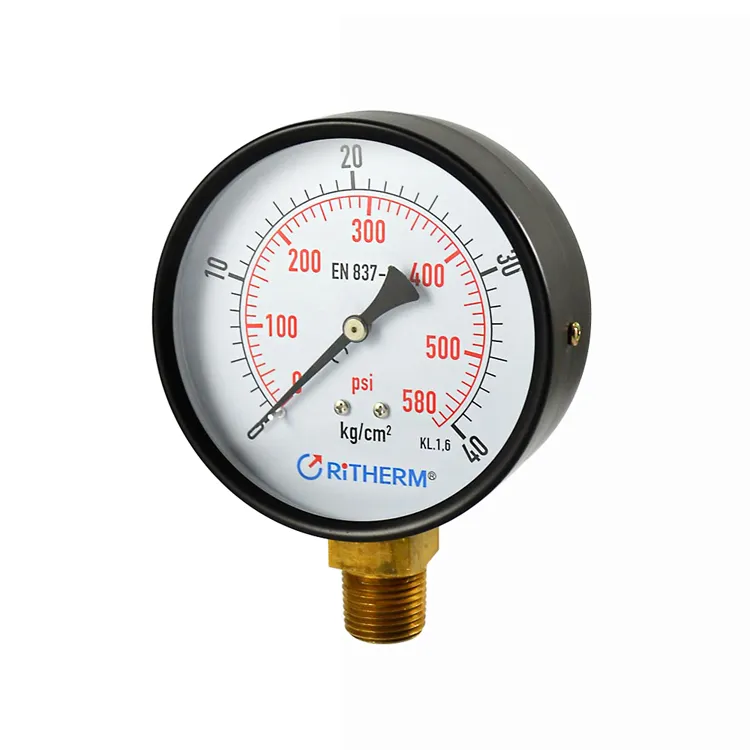
A Bourdon Tube Dry Pressure Gauge is a mechanical instrument designed to measure and display the pressure of gases or liquids in an industrial system. It uses a curved, elastic metal tube as its primary sensing element. When pressure enters the tube, the element changes shape slightly, and this movement is converted into a pointer indication on the dial.
The term "dry" means that the gauge case is not filled with damping liquid such as glycerin or silicone oil. The internal measuring mechanism operates in an air-filled case, making the instrument a practical and economical option for applications where severe vibration or pressure pulsation is not a major concern.
Unlike electronic pressure sensors, a conventional mechanical Bourdon tube gauge does not need an external power supply to display pressure. This makes it particularly useful for equipment operators who need a direct, continuously visible reading.
Key Characteristics of a Dry Bourdon Tube Gauge
- Mechanical operation: Measures pressure through the elastic deformation of a metal tube.
- Direct indication: Displays the measured value through a pointer and graduated dial.
- Power-free measurement: Does not require electricity or batteries for basic operation.
- Practical construction: Uses a relatively simple mechanical assembly.
- Flexible configurations: Available in different dial sizes, pressure ranges, and connection arrangements.
For industrial buyers, the main advantage is straightforward pressure monitoring with relatively low operating complexity. However, selecting the right model requires checking the medium, pressure range, temperature, and installation environment.
2. How Does a Bourdon Tube Dry Pressure Gauge Work?
The working principle of a Bourdon tube pressure gauge is based on the elastic deformation of a specially shaped metal tube. This principle converts internal pressure into mechanical movement that can be displayed on a scale.
Step 1: Pressure Enters the Measuring Tube
The process medium enters the gauge through its pressure connection and flows into the Bourdon tube. One end of the tube is fixed to the connection, while the other end is sealed and free to move.
Step 2: The Tube Changes Its Shape
A Bourdon tube generally has an oval or elliptical cross-section and is manufactured in a curved shape. When internal pressure increases, the cross-section tends to become more circular. This produces a slight change in the curvature of the tube, causing it to straighten or open outward.
Step 3: Mechanical Movement Transfers the Displacement
The free end of the Bourdon tube moves in response to pressure changes. A connecting link transfers this small movement to a mechanical movement assembly containing gears and a pinion.
Step 4: The Pointer Displays the Pressure
The movement assembly converts the linear displacement into rotary motion. The pointer then travels across the graduated dial to indicate the corresponding pressure value.
Because the entire measuring process is mechanical, a Bourdon tube gauge can provide continuous local indication without an electronic display. Its measurement performance, however, depends on the quality of the sensing element, movement mechanism, manufacturing tolerances, and operating conditions.
3. What Are the Main Components of a Dry Pressure Gauge?
Understanding the construction of a dry pressure gauge helps buyers evaluate product quality and identify which specifications matter most for their applications.
| Component | Primary Function | What Buyers Should Check |
|---|---|---|
| Case | Protects the internal mechanism. | Material, durability, and environmental protection. |
| Bezel Ring | Secures the front assembly. | Construction and mounting compatibility. |
| Window | Protects the dial and pointer. | Visibility, impact resistance, and material. |
| Bourdon Tube | Detects pressure through elastic deformation. | Material compatibility and pressure range. |
| Movement | Transfers tube displacement to the pointer. | Mechanical consistency and stability. |
| Dial Plate | Provides graduated pressure readings. | Scale, unit, readability, and dial size. |
| Pointer | Indicates the measured pressure. | Visibility and stable movement. |
| Pressure Connection | Connects the gauge to the process system. | Thread type, size, material, and mounting position. |
Why Does Bourdon Tube Material Matter?
The measuring element comes into direct contact with the process medium. Therefore, its material must be compatible with the gas or liquid being measured.
Copper alloy is commonly used in general-purpose pressure gauges for compatible, non-corrosive media. Stainless steel or other specialized materials may be necessary when the process involves corrosive substances or more demanding environmental conditions.
Choosing an unsuitable material can cause corrosion, leakage, premature failure, or inaccurate readings. Buyers should always confirm the wetted material specifications before ordering.
4. Why Choose a Dry Pressure Gauge?
Dry pressure gauges remain popular because they offer a practical balance between measurement functionality, construction simplicity, and purchasing cost.
The absence of liquid filling provides a cost-effective solution for standard pressure monitoring applications.
Mechanical operation allows pressure readings without batteries, wiring, or electrical connections.
The relatively straightforward construction makes routine inspection and replacement convenient.
Multiple dial sizes and connection configurations support different equipment layouts.
Dry Pressure Gauge vs. Liquid-Filled Pressure Gauge
One common purchasing mistake is choosing a dry gauge for an environment with continuous mechanical vibration. The absence of damping liquid means the pointer may fluctuate significantly when exposed to pulsating pressure or strong vibration.
| Comparison | Dry Pressure Gauge | Liquid-Filled Pressure Gauge |
|---|---|---|
| Case Filling | Air-filled | Filled with damping liquid |
| Pointer Movement | More sensitive to vibration | Damped and generally steadier |
| Typical Cost | Generally economical | Generally higher |
| Maintenance Considerations | Simple mechanical inspection | May require attention to filling liquid and sealing |
| Typical Applications | Stable pressure environments | Applications with vibration or pulsation |
For applications involving strong vibration, frequent pressure fluctuations, or demanding dynamic conditions, a liquid-filled gauge or an appropriate pulsation-damping accessory may be more suitable. The final choice should be based on actual operating conditions rather than purchase price alone.
5. Where Are Dry Bourdon Tube Gauges Used?
Dry Bourdon tube pressure gauges are commonly used in industrial environments where operators need convenient and direct pressure indication.
Pneumatic Systems
Compressed air equipment relies on stable pressure to operate cylinders, pneumatic valves, actuators, and other components. A dry pressure gauge helps operators monitor air supply pressure and identify abnormal pressure changes that may affect machine performance.
Manufacturing and Fabrication Equipment
Industrial machinery often uses pneumatic or hydraulic systems to control movement, clamping, and material processing. Pressure indication helps maintenance teams verify operating conditions and identify potential problems.
Compressed Gas Systems
In compatible compressed gas applications, a Bourdon tube gauge provides a direct indication of system pressure. Material compatibility and the required pressure range must be confirmed before installation.
General Process Equipment
Pipelines, pumps, regulators, and other process equipment may require local pressure monitoring. A mechanical gauge offers an accessible way to check operating conditions without installing a powered display system.
Light Industrial Applications
Small production facilities, workshops, and equipment manufacturers often choose dry pressure gauges for routine pressure monitoring because they are practical and economical.
6. How to Select the Right Bourdon Tube Dry Pressure Gauge
Choosing the wrong gauge can result in poor readability, premature failure, incorrect pressure indication, or connection problems during installation. Before purchasing, industrial buyers should evaluate the following factors.
1. Determine the Actual Operating Pressure
Start by identifying the normal working pressure, maximum operating pressure, and possible pressure spikes.
As a general selection guideline, steady operating pressure is often kept within approximately 75% of the full-scale range. For fluctuating pressure conditions, a lower operating percentage may be necessary. Always follow the manufacturer's specified working-pressure limits and applicable standards.
Example: If a system normally operates at 6 bar, a 0–10 bar gauge may provide a suitable reading range under stable conditions. However, if pressure regularly fluctuates or spikes, a different range or protective accessory may be required.
2. Select the Appropriate Dial Size
Dial size influences readability and installation space. A larger dial is useful when operators need to read pressure from a distance, while compact gauges are appropriate for space-restricted machinery.
- 40–50 mm: Compact equipment and limited installation spaces.
- 63–80 mm: General machinery and standard equipment panels.
- 100 mm: Better visibility for many industrial applications.
- 150–250 mm: Large equipment panels and applications requiring remote visual readability.
3. Check Medium Compatibility
Determine whether the measured medium is air, nitrogen, water, oil, or another gas or liquid. Check whether it can corrode the Bourdon tube or block the pressure connection.
For standard copper-alloy measuring systems, the medium should not attack the wetted components. If compatibility is uncertain, consult the manufacturer before selecting the gauge.
4. Confirm the Pressure Connection
Thread compatibility is essential for leak-free installation. Check the connection size, thread standard, material, and mounting position.
Common connection configurations include lower-mounted and back-mounted designs. The correct choice depends on the equipment structure and available installation space.
5. Consider Operating Temperature
Ambient temperature and process medium temperature can affect measurement performance. Always verify the gauge's temperature limits and whether additional temperature-related errors need to be considered.
6. Evaluate Accuracy Requirements
Accuracy class indicates the permissible measurement deviation under specified reference conditions. Applications requiring tighter measurement tolerances may need a higher-accuracy instrument and an appropriate calibration procedure.
7. Which Technical Specifications Should Buyers Check?
Before requesting a quotation, buyers should prepare a technical specification list. This reduces communication delays and helps manufacturers recommend the correct product configuration.
The following table summarizes the published specifications of the Ritherm Bourdon Tube Dry Pressure Gauge.
| Specification | Ritherm Product Details |
|---|---|
| Product Type | Bourdon Tube Dry Pressure Gauge |
| Design Standard | EN 837-1 |
| Nominal Dial Sizes | 40, 50, 63, 80, 100, 150, 200, 250 mm |
| Pressure Range | 0–0.6 to 600 bar / psi |
| Vacuum Range | -1 bar to 0 |
| Compound Range | -1 to 24 bar / psi |
| Accuracy Class | 40 and 50 mm: K1.2, 5; 63–250 mm: K1.1.6 (as listed in the product specification) |
| Ambient Temperature | -40°C to +70°C |
| Maximum Medium Temperature | +70°C |
| Protection Class | IP32 |
| Case Material | Black steel |
| Bourdon Tube Material | Copper alloy |
| Connection Material | Brass |
| Movement Material | Brass |
Available Connection Sizes
| Gauge Size | Standard Connection |
|---|---|
| 40 mm | G 1/8 |
| 50 mm | G 1/4 B |
| 63 mm | G 1/4 B |
| 80 mm | G 3/8 B |
| 100 mm | G 1/2 B |
| 150 mm | G 1/2 B |
| 200 mm | G 1/2 B |
| 250 mm | G 1/2 B |
Note: The above information summarizes the manufacturer's published product specifications. Confirm the exact range, accuracy notation, connection, mounting configuration, and availability with Ritherm before ordering. Pressure ranges and other units may be configured according to the product options.
Understanding Bourdon Tube Shapes
Different Bourdon tube geometries are used to accommodate different pressure ranges and mechanical requirements.
- C-shaped tube: A curved sensing element commonly used for lower and medium pressure ranges.
- Coiled or helical tube: A geometry used in certain higher-pressure designs to provide suitable mechanical displacement and measurement performance.
In Ritherm's published product configuration, C-shaped tubes are specified for ranges below 100 bar, while coiled-type tubes are specified above 100 bar. The exact configuration should be confirmed against the selected model.
8. How to Install and Maintain a Pressure Gauge
Correct installation is essential for reliable readings and a longer service life. Even a well-manufactured pressure gauge can deliver poor results if it is installed incorrectly or exposed to unsuitable operating conditions.
Installation Recommendations
- Verify the connection: Confirm that the gauge thread matches the equipment connection. Never force incompatible threads together.
- Use suitable sealing: Apply an appropriate sealing method for the specified thread type and process medium.
- Choose a readable position: Install the gauge where operators can easily observe the dial.
- Avoid unnecessary vibration: Use suitable mounting arrangements or vibration protection when required.
- Prevent overpressure: Ensure the operating pressure remains within the manufacturer's specified limits.
- Check for leakage: Inspect the connection and surrounding components after installation.
Routine Maintenance Practices
- Inspect the dial, pointer, and window for visible damage.
- Check for leakage around the pressure connection.
- Observe whether the pointer returns to the expected zero position when depressurized.
- Look for abnormal pointer fluctuations or signs of mechanical sticking.
- Compare readings against a suitable reference instrument when measurement accuracy is in question.
- Arrange calibration or replacement according to application requirements and the maintenance schedule.
A gauge showing signs of damage, leakage, persistent zero error, or unstable readings should not be relied upon until it has been inspected and verified. Never attempt to repair a pressure instrument while it remains connected to a pressurized system.
9. Common Pressure Gauge Problems and Solutions
Understanding common gauge problems helps maintenance personnel identify potential causes before they lead to equipment downtime.
| Problem | Possible Cause | Recommended Action |
|---|---|---|
| Pointer does not return to zero | Overpressure, mechanical damage, or zero shift. | Remove from service and arrange inspection or calibration. |
| Pointer fluctuates continuously | Pressure pulsation or mechanical vibration. | Evaluate a suitable damping solution or liquid-filled gauge. |
| Reading is inaccurate | Calibration drift, temperature effects, or damaged components. | Compare with a calibrated reference instrument. |
| Gauge responds slowly | Blocked connection or restricted pressure passage. | Isolate and inspect the pressure connection safely. |
| Pressure leakage | Incorrect thread connection, damaged seal, or faulty components. | Depressurize and inspect the connection and sealing arrangement. |
| Dial is difficult to read | Incorrect dial size, poor lighting, or damaged window. | Consider a larger dial or replace damaged components. |
It is important to remember that pressure gauges are measuring instruments, not pressure-control devices. If a system requires automatic pressure regulation, alarms, or remote monitoring, additional control equipment may be necessary.
10. Why Consider Ritherm Pressure Gauges?
Choosing a pressure gauge manufacturer involves more than comparing unit prices. Industrial buyers also need to consider specification consistency, product configuration, manufacturing experience, technical communication, and supply requirements.
Ritherm is a pressure gauge brand of Rising Instrument, a Chinese manufacturer and supplier specializing in pressure measurement instruments since 2003.
Its Bourdon Tube Dry Pressure Gauge product range is designed for general industrial pressure monitoring, including pneumatic systems, fabrication equipment, compressed gas applications, and other compatible industrial processes.
Product Features for Industrial Buyers
- Multiple dial sizes: Options from 40 mm to 250 mm support different installation and visibility requirements.
- Broad pressure coverage: Published pressure ranges extend from 0–0.6 bar to 600 bar.
- Multiple measurement options: Pressure, vacuum, and compound ranges are available.
- Practical material configuration: Copper-alloy Bourdon tube with brass connection and movement.
- Standard-based design: The product is specified in accordance with EN 837-1.
- Industrial application coverage: Designed for compatible gases and liquids in common industrial environments.
What Information Should You Provide When Requesting a Quotation?
To help the manufacturer identify an appropriate model and provide a more accurate quotation, prepare the following information:
- Required pressure range and normal working pressure.
- Dial diameter and desired display unit.
- Measured medium, such as air, water, or compatible gas.
- Required connection thread and mounting position.
- Operating ambient and medium temperatures.
- Required accuracy class and applicable standards.
- Estimated order quantity and any special requirements.
Providing these details at the beginning of the purchasing process can reduce specification misunderstandings, avoid unsuitable product selections, and make communication between buyers and suppliers more efficient.
11. Frequently Asked Questions
Q1. What is the main function of a Bourdon Tube Dry Pressure Gauge?
Its main function is to measure and display the pressure of compatible gases or liquids in a system. It uses the elastic deformation of a metal Bourdon tube to move a pointer across a graduated dial.
Q2. Does a dry pressure gauge require electricity?
No. A conventional mechanical Bourdon tube dry pressure gauge operates without an external power supply. Pressure is converted directly into mechanical movement and displayed on the dial.
Q3. What is the difference between a dry and a liquid-filled pressure gauge?
A dry pressure gauge has an air-filled case, while a liquid-filled gauge contains damping liquid. Liquid filling helps reduce pointer vibration and improves readability in applications with mechanical vibration or pressure pulsation.
Q4. Which media can a copper-alloy Bourdon tube gauge measure?
It is generally suitable for compatible gases and liquids that do not attack the copper-alloy measuring system or obstruct the pressure passage. The exact compatibility must be checked before use.
Q5. What pressure range is available for Ritherm dry pressure gauges?
Ritherm publishes pressure ranges from 0–0.6 bar to 600 bar, as well as vacuum ranges from -1 bar to 0 and compound ranges from -1 to 24 bar. Contact the manufacturer to confirm the specific model and available scale configuration.
Q6. How do I choose the correct pressure gauge dial size?
Consider installation space, viewing distance, and reading requirements. Smaller gauges are suitable for compact machinery, while larger dial sizes generally provide better readability for industrial equipment panels.
Q7. Can a dry Bourdon tube gauge be used in a vibrating environment?
It can be used where vibration is limited, but continuous or severe vibration may cause pointer fluctuations and accelerate mechanical wear. A liquid-filled gauge or suitable vibration-damping solution should be evaluated for such conditions.
Q8. What does EN 837-1 mean for a pressure gauge?
EN 837-1 is a European standard covering Bourdon tube pressure gauges, including relevant design, metrological, and testing requirements. Buyers should confirm the specific product's declared compliance and documentation with the manufacturer.
Q9. How often should a mechanical pressure gauge be calibrated?
Calibration frequency depends on the application, measurement criticality, operating environment, and maintenance requirements. Equipment used in critical processes may require more frequent verification than gauges used for general indication. Follow the site's calibration program and applicable regulations.
Q10. What information is needed to purchase a Bourdon Tube Dry Pressure Gauge?
Prepare the pressure range, dial size, connection thread, mounting position, medium, temperature, accuracy requirement, and quantity. Providing these specifications helps the manufacturer recommend a suitable configuration and prepare an accurate quotation.
12. Conclusion: Making the Right Pressure Gauge Selection
A Bourdon Tube Dry Pressure Gauge is a practical mechanical instrument for monitoring pressure in a wide range of compatible industrial applications. Its simple working principle, power-free operation, and flexible product configurations make it a useful choice for pneumatic equipment, compressed gas systems, manufacturing machinery, and general process applications.
However, reliable pressure monitoring depends on selecting the correct pressure range, measuring element material, dial size, connection, accuracy, and environmental protection. Buyers should also consider pressure fluctuations, vibration, and temperature to avoid premature instrument failure.
Working with an experienced manufacturer can simplify product selection and help ensure that the final configuration meets actual operating requirements. With its range of pressure gauges and industrial measurement products, Ritherm provides options for buyers seeking practical pressure monitoring solutions.
Looking for a Reliable Bourdon Tube Dry Pressure Gauge Supplier?
Need a suitable pressure range, custom dial size, or specific connection configuration for your industrial equipment? Ritherm is ready to help you find a pressure gauge solution that matches your application requirements.
Contact our team today to discuss your specifications, request product details, and get a quotation for your project or bulk purchasing needs.
Contact Us for a QuoteRitherm | Professional Pressure Measurement Solutions